


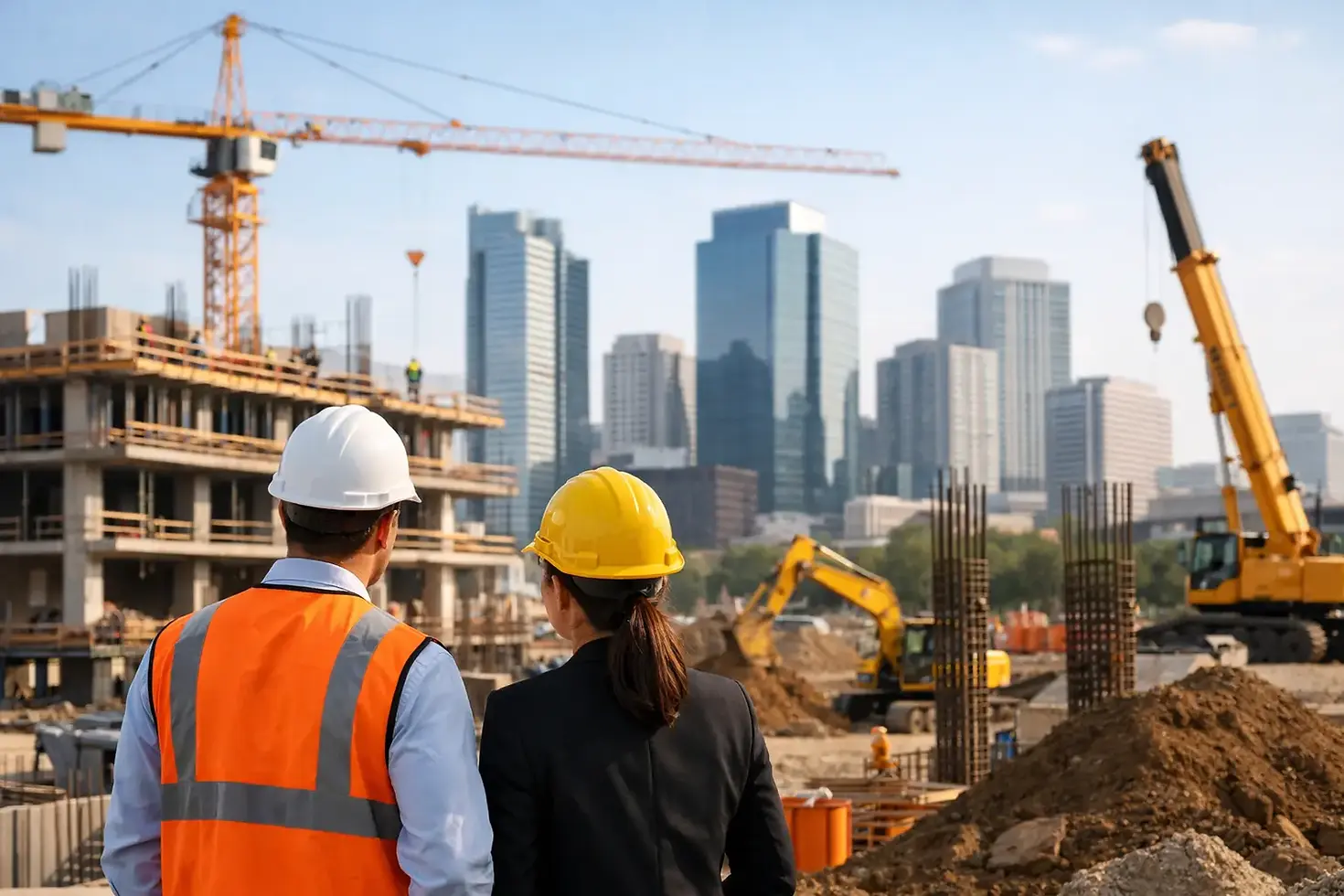
Commercial Construction Projects Near Me

If you are searching for commercial construction projects near me, you are probably not looking for theory. You need a contractor who can assess the site, understand the business goals, coordinate the right trades, and keep the job moving without costly surprises. For business owners and property stakeholders in Los Angeles, that usually means finding a team that can manage both the details on paper and the reality on site.
Commercial construction has very little room for guesswork. Delays affect openings, tenant occupancy, customer access, revenue, and financing. A project that looks straightforward at first can quickly become complicated once permitting, structural conditions, code requirements, and trade coordination enter the picture. That is why the right local construction partner matters as much as the design itself.
What people really mean by commercial construction projects near me
Most clients are not simply looking for a building company with a nearby address. They are looking for a team that knows the local approval process, understands how to build within California requirements, and can respond quickly when decisions need to be made. Proximity matters, but local experience matters more.
In practice, commercial projects can include office renovations, tenant improvements, retail build-outs, restaurant construction, medical and professional spaces, exterior upgrades, and ground-up development. Each project type comes with a different set of priorities. A retail space may need speed and brand consistency. An office renovation may need phased work to reduce disruption. A restaurant usually requires especially tight coordination around mechanical, plumbing, electrical, and health-related requirements.
That is where a full-project approach becomes valuable. Instead of treating design, planning, and construction as separate conversations, the process works better when the team can coordinate those moving parts from the beginning.
Why local coordination makes a difference
A commercial construction project is not judged only by the finished look. It is judged by whether the schedule held, whether change orders were controlled, whether inspections were passed, and whether the space performs the way it should.
Local coordination helps at every stage. Site visits happen faster. Existing conditions can be reviewed in person before pricing is finalized. Questions from the field can be resolved without long delays. If a project needs adjustment because of structural findings, lead times, or jurisdiction requirements, a nearby and organized team is better positioned to act quickly.
For Los Angeles-area projects, this is especially relevant. Building standards, permit review, zoning considerations, and logistical issues can vary by city and property type. A contractor needs to be more than available. They need to be prepared.
How to evaluate commercial construction projects near me
The first thing to look at is not just a gallery of completed work. It is whether the contractor appears capable of managing the process behind that work. Commercial construction depends on planning discipline. A polished finish means very little if the project was delivered late, over budget, or with constant communication gaps.
Look for signs of structure. That includes clear scoping, realistic budgeting, documented timelines, licensed and insured operations, and a defined point of contact. Projects run better when clients know who is overseeing progress and how decisions are being tracked.
It is also smart to ask how the contractor handles coordination with architects, engineers, consultants, and specialty trades. Some companies can build well but struggle when a project requires multiple disciplines to move in sync. Others are set up specifically to manage that complexity. If your project involves layout revisions, permit documentation, structural review, or phased scheduling, that difference becomes very noticeable.
Past experience with similar project types also matters, but it should be weighed carefully. A contractor who excels in residential work is not automatically the right fit for a commercial build-out. Commercial spaces often involve stricter compliance demands, tighter deadlines, and more stakeholders. The best fit is a team that understands both construction quality and operational impact.
The stages that shape a successful project
A strong commercial project usually begins with a serious on-site consultation. This is where the team evaluates the property, clarifies the business objective, reviews constraints, and identifies likely scope items before assumptions turn into budget problems. It is also where experienced contractors start spotting issues that may not be obvious in a walkthrough, such as access limitations, utility concerns, outdated systems, or sequencing challenges.
From there, pre-construction planning becomes the foundation for everything that follows. Budget alignment, design coordination, scheduling, permitting strategy, material selection, and trade sequencing all need to work together. This stage is often where projects either gain control or start drifting.
Construction itself should feel organized, not reactive. That means regular communication, site supervision, quality checks, and schedule management. On commercial jobs, one delay tends to affect several trades at once. Good project management reduces that ripple effect.
Close-out is just as important. Final corrections, inspections, punch work, and turnover should be handled with the same care as the earlier stages. A commercial client needs a space that is ready to operate, not one that still feels half-finished after substantial completion.
Common issues that cause commercial projects to go off track
Many project problems begin before construction starts. Incomplete scope definition, unrealistic allowances, or pricing based on limited site review can lead to major adjustments later. The lowest initial bid is not always the most cost-effective path if it leaves critical items unresolved.
Communication is another common weak point. When too many details are passed informally, misunderstandings build quickly. Commercial clients typically need timely updates, documented decisions, and a contractor who can raise issues early instead of waiting until they become urgent.
There is also the matter of schedule pressure. Every client wants speed, but speed without planning usually creates rework. A dependable contractor does not promise impossible timelines just to win the job. They build a schedule that accounts for approvals, procurement, inspections, and site conditions, then manage it actively.
What a full-service commercial builder should provide
For many owners and operators, the ideal experience is working with one team that can coordinate the project from early planning through completion. That does not mean every service happens in-house, but it does mean the client is not left trying to manage gaps between design, engineering, permitting, and field execution.
A well-run commercial builder should provide practical clarity. That includes defining scope, identifying risks, setting realistic expectations, and maintaining accountability throughout construction. It should also include craftsmanship that holds up over time. Commercial spaces take daily use, and the quality of finishes, systems, and installation affects both appearance and long-term maintenance.
This is one reason clients often value a company that combines construction oversight with design coordination. It reduces fragmentation. It also helps ensure that what is drawn can actually be built efficiently in the field.
In Southern California, where timing, regulation, and quality standards all matter, that level of coordination can save both time and unnecessary cost. Pars Builders approaches projects with that full-project mindset, helping clients move from concept to completion with stronger oversight at each phase.
Choosing the right fit for your property and goals
The best contractor for your project is not always the biggest one or the cheapest one. It is the one that understands your timeline, your property conditions, your quality expectations, and the operational demands tied to the space.
If you are renovating an occupied commercial property, you may need careful phasing and disruption control. If you are preparing a space for a new tenant, speed and inspection readiness may be the top priorities. If you are planning a ground-up project, early coordination with design and engineering will likely shape the entire budget and schedule. Different projects require different strengths.
That is why the search for commercial construction projects near me should lead to more than a list of names. It should lead to a conversation with a contractor who asks the right questions, evaluates the site carefully, and explains the path forward with confidence.
A good commercial project does not happen by accident. It is built through planning, accountability, and experienced execution. When your contractor brings those qualities to the table from day one, the process becomes clearer, the risks become more manageable, and the finished space is far more likely to support the business goals that made the project worth starting in the first place.


Comments